Decision Systems, eDiscovery, Litigaze + More
Artificial Lawyer
2w · 15 min
Decision systems, such as Jev, as well as the recently launched OpenAI Decisions API, herald a new, but also curiously déjà vu, way of classifying ...
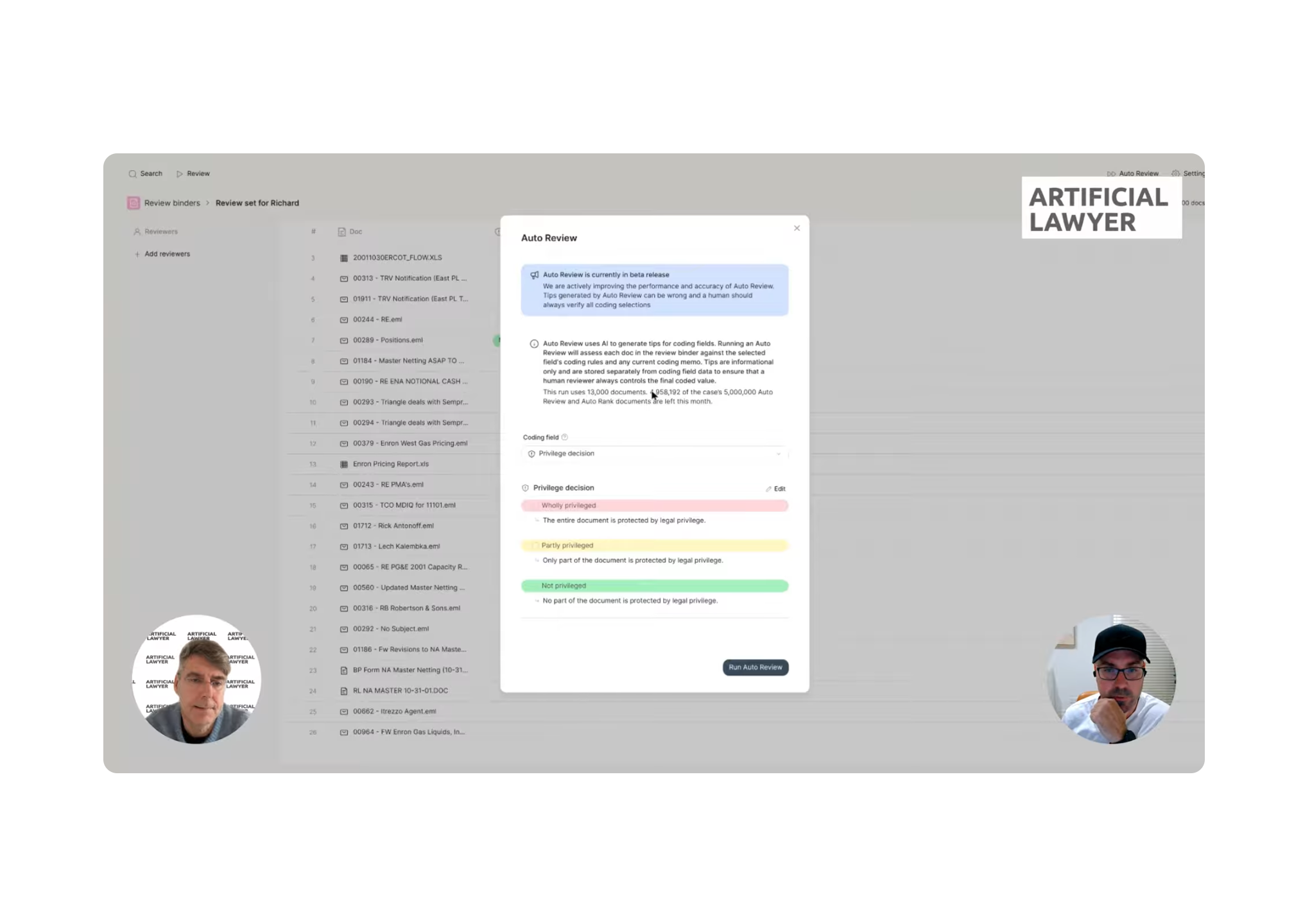
Decision systems, such as Jev, as well as the recently launched OpenAI Decisions API, herald a new, but also curiously déjà vu, way of classifying legal information. The approach can work via open-source models and also deliver huge cost savings in areas such as eDiscovery, or first pass contract review.In this in-depth AL TV Interview, Len Hickey, CEO of Litigaze, and Artificial Lawyer, first explore the potential impact of these light and agile decision systems, and then see how Litigaze is using the technology for eDiscovery needs.There is a transcript of our discussion below. For AL, one of the key points about decision systems is that law firms, or inhouse teams, could spin up dozens of such applications across multiple practice areas in order to provide fast and efficient responses for very specific use cases, rather than relying on a single frontier LLM that is often ‘overkill’ for many of the needs that lawyers have. Moreover, as Hickey notes, if you go the open-source route you can post-train these decision systems within your firm to drive higher accuracy, and customise them for very specific use cases. Plus, although these are still probabilistic tools, they always show % estimates for their accuracy, which helps with explainability – which you won’t get with a general LLM approach. And that matters in areas such as eDiscovery especially. For AL, it’s a bit like a new version of some of the earlier no-code, workflow automation tools, which we saw before the genAI…
That's the opening of the original reporting — continue reading at Artificial Lawyer for the rest.
Open at Artificial Lawyer ↗