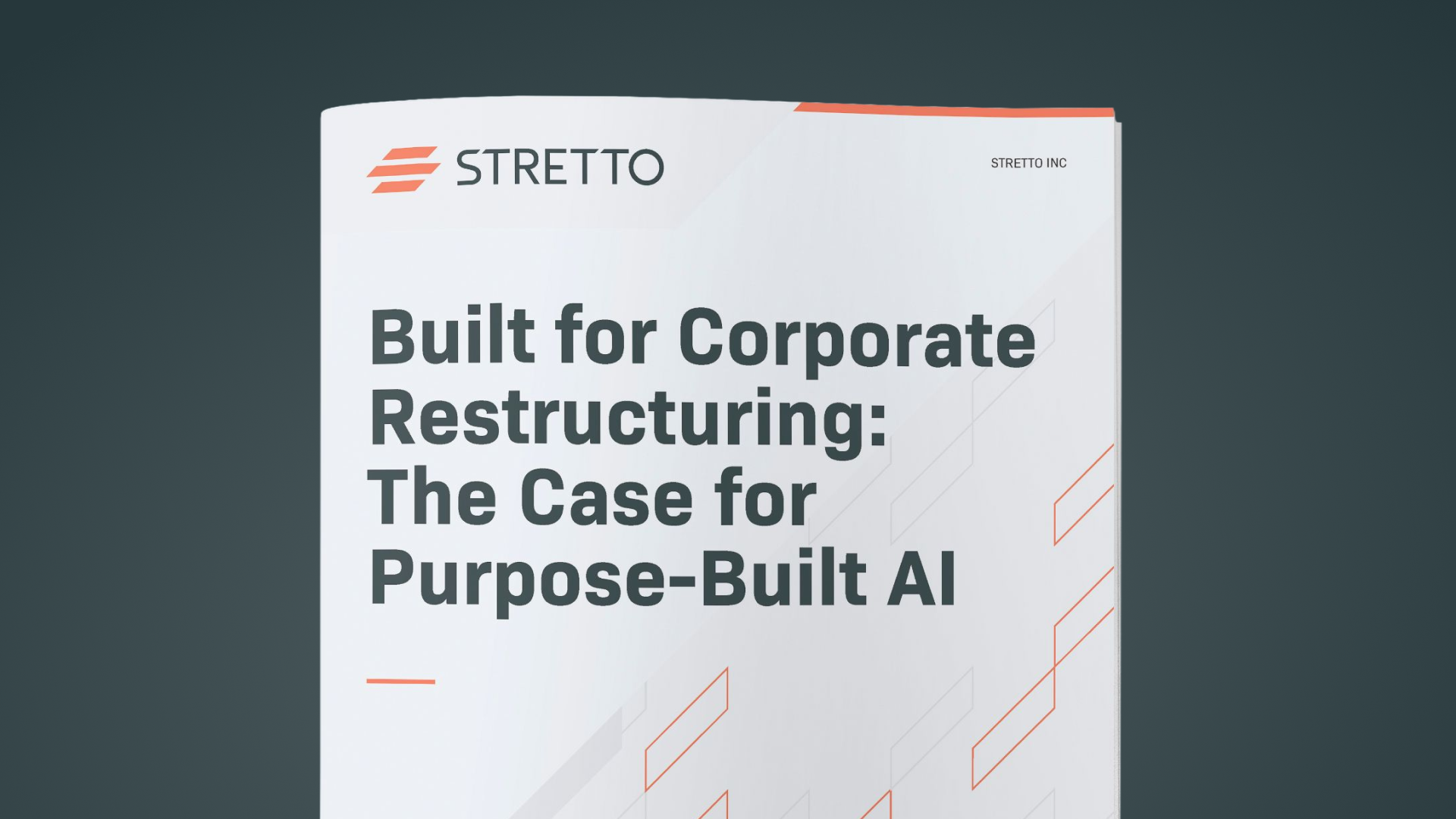
Built for Corporate Restructuring: The Case for Purpose-Built AI
LawSites (LawNext)
4w · 26 min
Section 1: Five Realities Reshaping How Corporate Restructuring Gets Done Corporate restructuring operates at the intersection of legal precision and financial complexity, with stakeholder decisions routinely made under……
Section 1: Five Realities Reshaping How Corporate Restructuring Gets Done
Corporate restructuring operates at the intersection of legal precision and financial complexity, with stakeholder decisions routinely made under exigent circumstances. More data and shortened timelines have made that work harder. A 2025 study by Harvard and USC law professors published in the University of Chicago Law Review found that the average duration of large business bankruptcies declined dramatically over the past four decades, from approximately three years to three months. The attorneys, financial advisors, and trustees navigating these matters are asked to deliver faster, more defensible outcomes with the same or fewer resources. AI is the most practical tool available to meet that pressure.
For purposes of this discussion, “AI” refers primarily to generative AI and related large-language-model tools, not to rules-based automation or traditional predictive models. The relevant use case in restructuring is the ability to analyze, summarize, compare, extract, and draft from large volumes of structured and unstructured information.
Not all AI performs equally in high-stakes environments, and the
Five realities define where AI stands in restructuring today.…
That's the opening of the original reporting — continue reading at LawSites (LawNext) for the rest.
Open at LawSites (LawNext) ↗