Arbitrators Embrace + Reject Legal AI
Artificial Lawyer
4w · 5 min
A survey of 557 arbitration professionals in the US has found strongly conflicting data about legal AI. While some use cases for AI seem popular, ...
A survey of 557 arbitration professionals in the US has found strongly conflicting data about legal AI. While some use cases for AI seem popular, many others are shunned. Likewise, while 43% report significant time savings, 37% see no major benefits to AI use.
First, let’s look at the AAA and Jus Mundi survey data for what arbitrators are using AI for, and what they prefer not to.
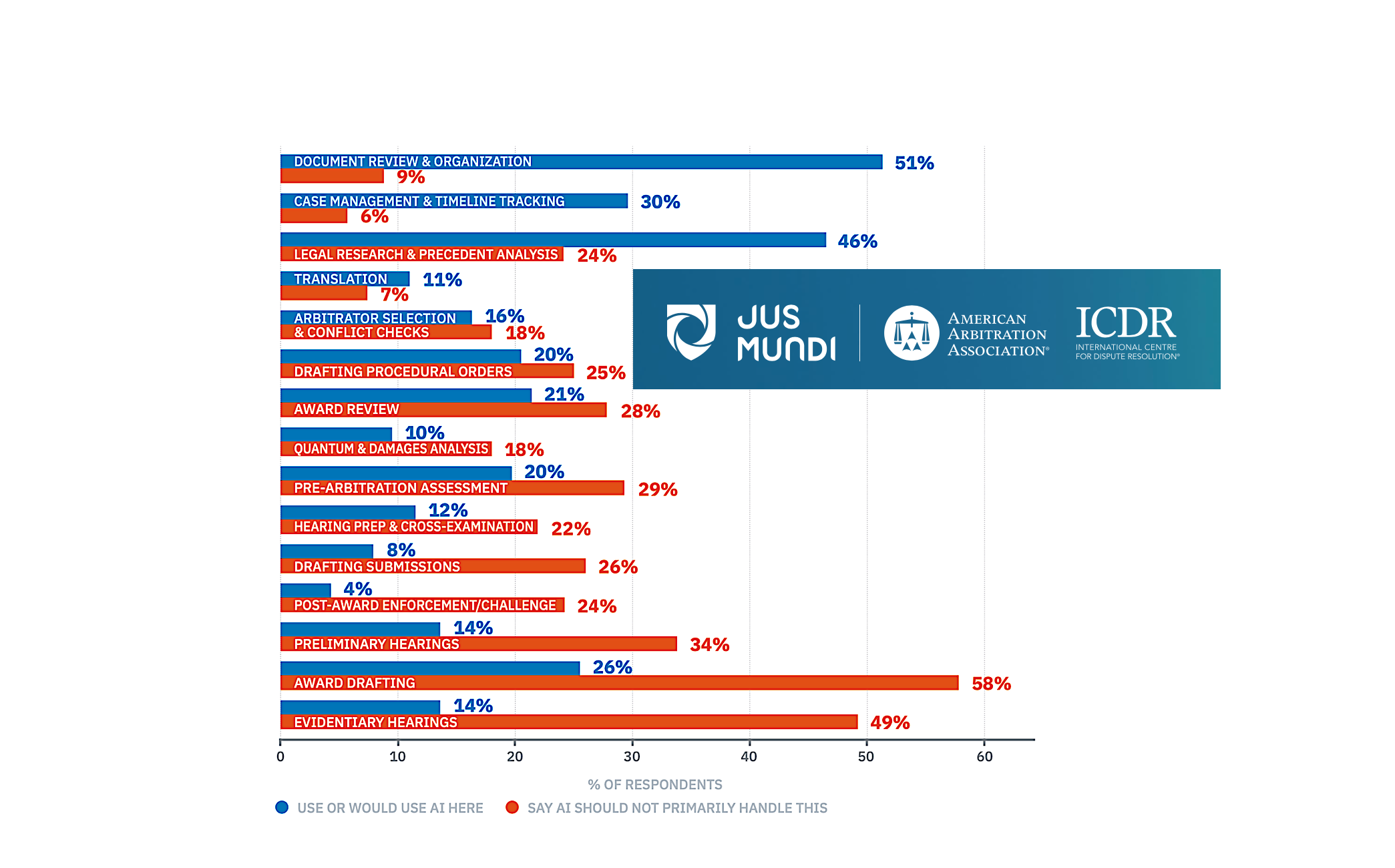
As you can see in the table below, what gets a relatively high level of use, or potential use, is document review and organisation, followed by legal research, and then case management and timeline tracking. Although, none of those three leading examples are higher than 51%.
Meanwhile, 58% explicitly said they would not primarily use AI to help with award drafting, i.e. the final ‘judgment’ in an arbitration, and 49% would also not primarily use AI in an evidentiary hearing.
Surprisingly, only 11% said they’d use AI for translation – despite the fact that there are now companies focused just on that use case for lawyers, along with several others focused on good quality translation in general. Perhaps this is because in such an environment arbitrators feel it’s just too risky to use AI when every word could matter?
The overall finding is that arbitrators are fairly conservative in their use of AI, at least based on this survey, trusting the technology primarily where the work is in the early stages, e.g. review and research.…
That's the opening of the original reporting — continue reading at Artificial Lawyer for the rest.
Open at Artificial Lawyer ↗