US Leadership on Open-Weight Models is Key to Global AI Safety
Tech Policy Press
1mo · 6 min
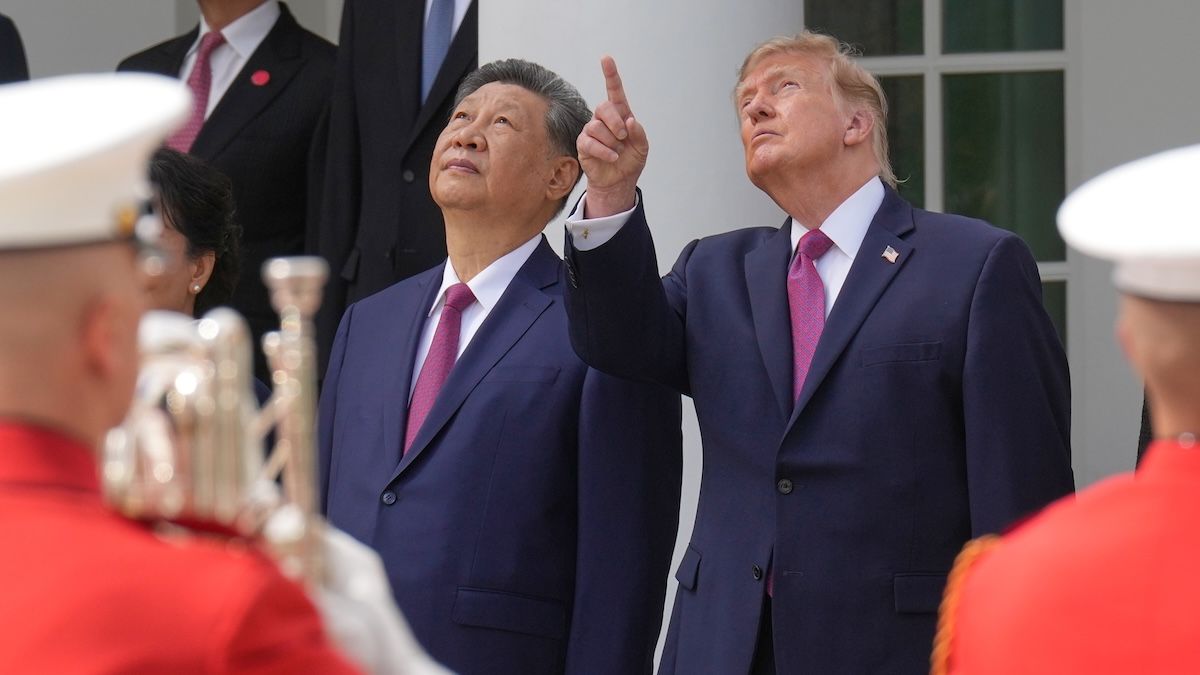
President Donald Trump and China's President Xi Jinping watch a flyover during a military review in the Rose Garden of the White House, Thursday, Sept. 24, 2026, in Washington.
President Donald Trump and China's President Xi Jinping watch a flyover during a military review in the Rose Garden of the White House, Thursday, Sept. 24, 2026, in Washington. (AP Photo/Jacquelyn Martin)As President Trump opens the White House doors to Chinese President Xi for a high-level bilateral summit beginning today, AI safety is top of mind for many policymakers, industry professionals, and experts—as we’ve heard all month. But there is a critical question that has received surprisingly little attention: what should the US government do about ever-advancing open-weight models?Open-weight models are models whose weights, or numerical parameters, are released publicly. That means anyone can download and modify the models. Some open-weight models require specialized hardware to host, while others are small enough to run on a personal device. Currently, most of the capable open-weight models—including GLM 5.3, Kimi K3, DeepSeek V4.1-Flash, and Qwen3.8—are Chinese. Open-weight models generally lag the best American closed-weight models, but the gap is narrowing. The UK government’s AI Security Institute estimated in July that leading open-weight models’ cyber capabilities are only four to seven months behind those of the best closed models.From an AI safety perspective, open-weight models present unique challenges. Because anyone can download open-weight models, users can often easily remove the guardrails that are meant to prevent people from using AI to hack others or…
That's the opening of the original reporting — continue reading at Tech Policy Press for the rest.
Open at Tech Policy Press ↗